



Sintered Metal Fibre Filter Media
For Polymer Melts, Filament Spinning and Process Liquids
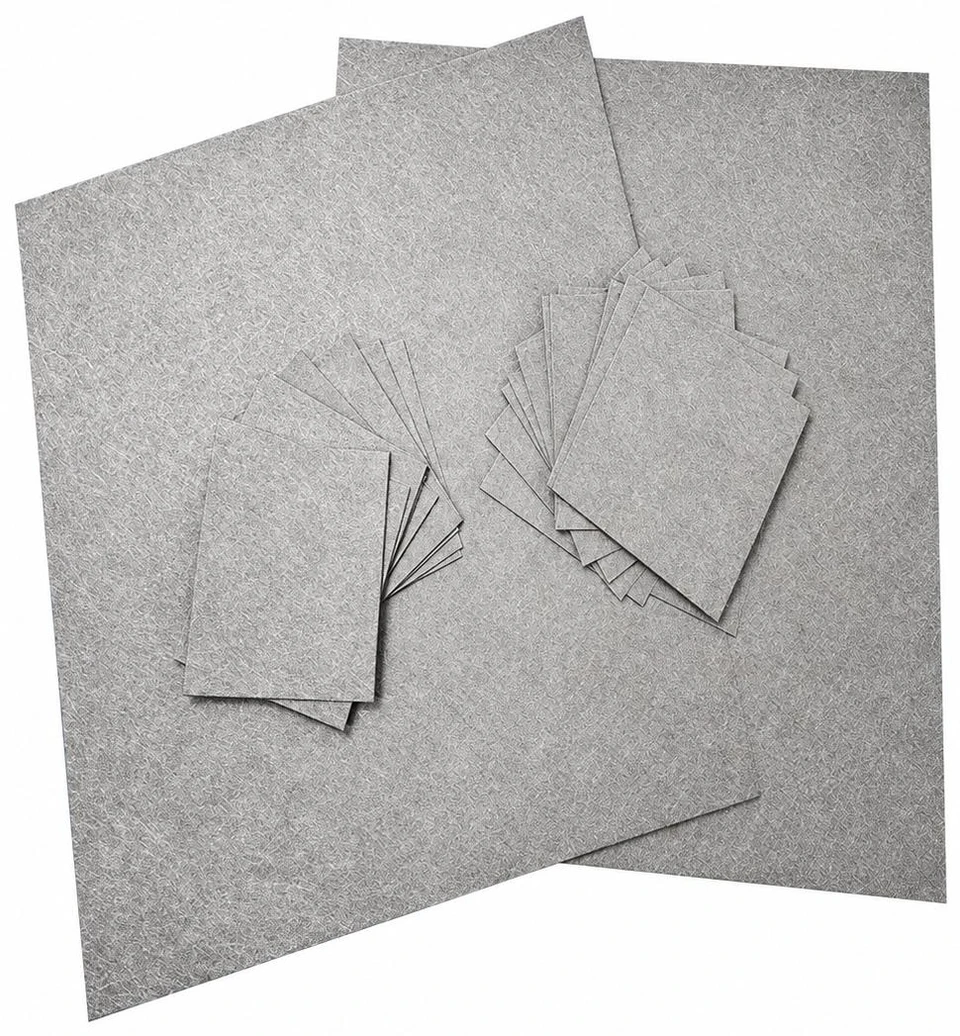
A Bonded, Porous Metal Network
Sheet Media | Pleated Elements | Leaf Disc Media
Technical Selection
Match the media family, retention requirement, flow resistance and support construction to the application. The supplied filter is defined by the agreed drawing and performance specification.
Construction and Family Selection
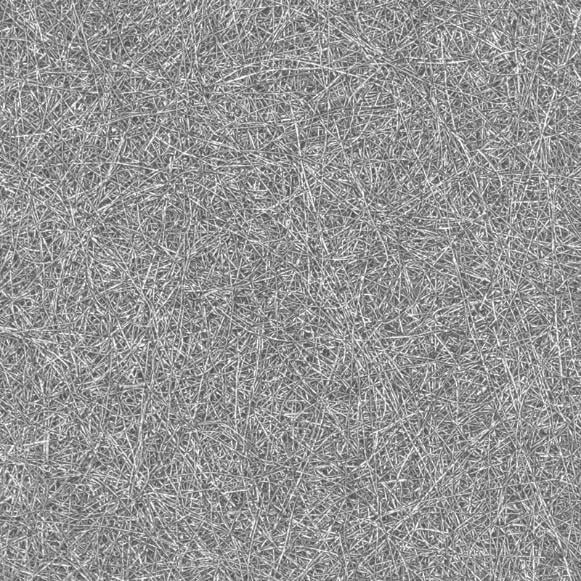
A Fibre Network with Space for Contaminants
In graded depth media, coarser inlet regions intercept larger contaminants while finer regions retain smaller material within the structure. Distributing retention through the depth helps use the available pore volume.
A3
- Construction
- Multilayer; pleatable
- Catalogue Positioning
- Polymerisation and spinning
C4
- Construction
- Multilayer; pleatable
- Catalogue Positioning
- Compression resistance and dirt capacity
C3
- Construction
- Multilayer; pleatable
- Catalogue Positioning
- Monomers and lower viscosity fluids
D4
- Construction
- Multilayer; non pleatable
- Catalogue Positioning
- High strength polymer leaf discs
E4
- Construction
- Symmetrical multilayer
- Catalogue Positioning
- Improved pleating behaviour
B3
- Construction
- Single layer; pleatable
- Catalogue Positioning
- Low viscosity, low contamination liquids
F3
- Construction
- Single layer; pleatable
- Catalogue Positioning
- Economical, lightweight media
Listed sheet size: 1500 × 1180 mm. Protective mesh is offered on one or both sides.
Match the Construction
The diagram illustrates a graded medium. Confirm the actual layer sequence, flow direction, protective mesh and structural backing for the selected family.
A3 Polymerisation and Spinning
Multilayer Media for Pleated Filters
A3 is the broad pleatable family in the catalogue, covering polymerisation, spinning and process liquid applications.
* Test basis and specification requirements.
Specify the Finished Filter
Confirm the media thickness, steel grade, supporting layers and effective filtration area before choosing a finished candle or pack assembly. A media code alone does not define the complete filter.
Retention Requirement
Request the particle size, removal efficiency and test method associated with the selected model. The numerical prefix in a model name is not presented here as an absolute micron rating.
C4 and C3 Depth Filtration Media
Select for the Fluid and Mechanical Duty
C4 Compression Resistant Media
Multilayer, pleatable construction aimed at dirt capacity and compression resistance.
C3 Lower Viscosity Fluids
Multilayer, pleatable media for monomers, prepolymers and other lower viscosity fluids.
* Test basis and specification requirements. The catalogue lists 1700 Pa for both 20C3 and 25C3; confirm the selected grade before ordering.
Mechanical Duty
Bubble point pressure is a wetting test result. It is not the allowable operating pressure or the collapse differential pressure of the completed element.
D4 and E4 Disc and Pleated Media
Choose the Required Forming Behaviour
D4 High Strength Disc Media
Multilayer media for polymer leaf disc filtration; specified as non pleatable.
E4 Media for Pleating
Symmetrical multilayer construction developed for improved pleat formation.
* Test basis and specification requirements.
B3 and F3 Single Layer Media
Options for Different Service Priorities
B3 Low Contamination Liquids
Pleatable media for lower viscosity liquids such as hydraulic oil and fuel.
F3 Economical Media
Lightweight, pleatable construction positioned as an economical option.
* Test basis and specification requirements.
Understanding the Test Data
Compare Values on a Defined Test Basis
Average Bubble Point Pressure
This is the label used in the catalogue. In a wet bubble point test, gas displaces the wetting liquid from pores.
The result depends on the liquid and procedure; establish the defined endpoint before comparing suppliers.
Porosity
Porosity is the fraction of void space in the medium.
It differs from particle removal efficiency, woven mesh open area and the effective area of a pleated filter.
Air Permeability
The catalogue reports a flow per unit area.
Compare air permeability only at the same test pressure difference, gas conditions and specimen construction. Confirm the test basis for the selected grade with TSP.
Air Permeability Test Basis
Air permeability is presented as catalogue reference data in L/(dm²·min), meaning litres per square decimetre per minute. The unit interpretation, test pressure and acceptance limits require confirmation with TSP before specification.
Specification of the Finished Filter
The page does not provide complete grade specific thicknesses, alloy specifications, retention efficiency curves or finished element pressure and temperature limits. Obtain these for the selected construction before approval.
From Media Data to Process Performance
Pressure loss depends on fluid viscosity, flow, filtration area and media resistance. Airflow figures cannot directly predict polymer melt pressure loss.
Use application specific flow data and include the support structure and element geometry in the review.
Controlled Comparison
Compare candidate media at the same fluid, temperature, throughput and required retention. Verify clean pressure loss and subsequent pressure rise in the actual supported element.
Application, Cleaning and Validation
Qualify the Media in the Operating Process
Application and Performance
Metal fibre media are used in polymer candle, leaf disc and spin pack filters.
Removing solids, agglomerates and gels can support filament continuity and film quality; actual performance depends on the contamination and selected medium.
Define the Process
Record polymer or fluid grade, viscosity basis, flow range and temperature.
Identify contamination type, current element reference and the reason for replacement or improvement.
Review the Assembly
Provide a drawing with active area, media stack, supports, flow direction, seals and end connections.
Include operating pressure, change out differential pressure and transient conditions.
Set Trial Acceptance
Record initial pressure loss, pressure rise per operating hour or tonnage, run duration and product quality.
In spinning, include spinneret blockage and filament break trends; in film, track the agreed defect measure.
Cleaning and Reuse
Select the cleaning method for the deposit, alloy and assembled filter. Polymer filters may require thermal, chemical or ultrasonic treatment, followed by cleanliness and integrity assessment. Use a qualified procedure matched to the element.
Compare post cleaning flow and integrity results with a documented new element baseline. Integrity testing and particle removal efficiency measure different things; an acceptance method needs validation for the particular medium and element design.
Release for Reuse
Set approved acceptance limits, retain the element identification and cleaning history, and inspect the support structure, joints and sealing surfaces before returning the filter to service.
Polymer Filtration
Filter media selected for melt conditions and the required particle retention.
Material Selection
Match media construction to temperature, pressure and polymer compatibility.
Technical Support
Discuss filtration area, throughput and pressure drop for the application.