



Spin packs and metallic filters support controlled melt cleanliness, reliable sealing, stable pressure development and consistent distribution to the spinneret or extrusion die. Typical polymers include PET, rPET, PA6, PA66, PP, PE and speciality polymers. The pack body, filter geometry, media, layer stack and sealing interface are selected from the approved drawing and actual process data.
Spin Packs and Filters
For Polymer Extrusion
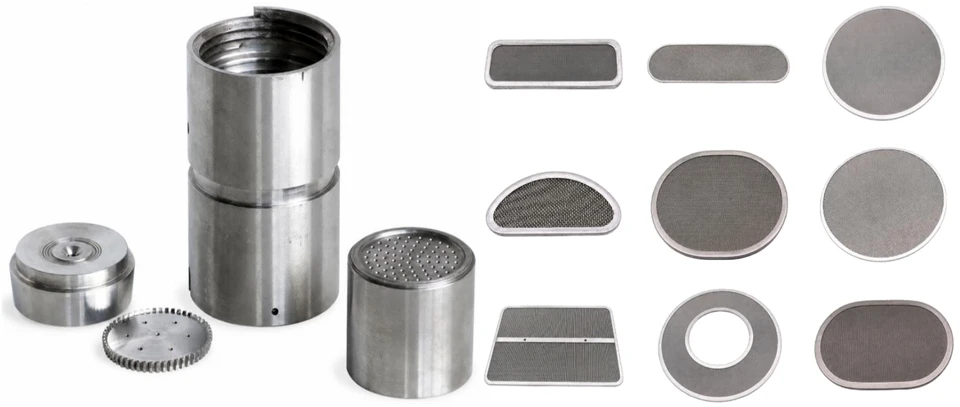
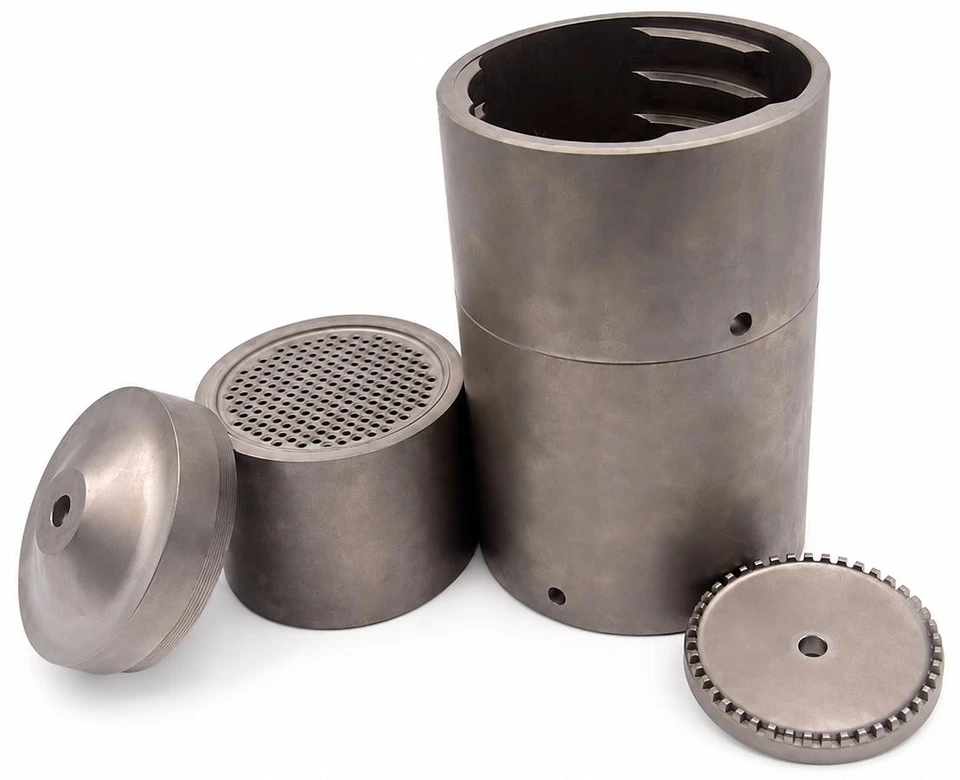
Precision Spin Pack Bodies
Custom circular and rectangular configurations can be engineered to match the spinning beam, spinneret, sealing method and validated process duty. Applications include textile and industrial filament spinning, staple fibre production and polymer processing duties requiring accurate location, sealing and support. Custom replacements require an approved drawing or verified sample, with the governing OEM limits retained.
Engineering Priorities
A spin pack is a heated precision assembly that contains pressure. Critical diameters, threads, shoulders, plate locations and spinneret seating must reproduce the approved interface. The body alloy, wall sections, closure and fasteners must suit the validated pressure and temperature envelope.
Mating faces and sealing elements must limit polymer bypass and external melt leakage. Internal transitions should distribute melt without unnecessary stagnation, dead zones or excessive residence time. The assembly should allow repeatable opening, cleaning, inspection and rebuilding without damaging precision surfaces.
Spinning Beam
Approved cavity, feed, mounting and sealing dimensions.
Internal Stack
Filter, loose media, screens, breaker or distribution plates and spinneret drawing.
Operating Duty
Polymer, throughput, temperature, pressure profile, cleaning and change cycle.
The approved drawing, validated material specification and process limits govern the final supplied construction.
Configuration and OEM Compatibility
Mounting, melt feed, body form, closure and sealing are interdependent. A dimensional match alone does not establish process suitability.
Installation
- Typical Alternatives
- Top mounted or bottom mounted
- Selection Basis
- Pack weight, access and spinning box design.
Melt Feed
- Typical Alternatives
- Top feed or side feed
- Selection Basis
- Existing melt route and inlet sealing interface.
Body Form
- Typical Alternatives
- Circular, rectangular or custom
- Selection Basis
- Spinneret size, cavity dimensions and product duty.
Closure
- Typical Alternatives
- Threaded, bolted, clamped or quick lock
- Selection Basis
- Approved OEM interface and validated pressure and temperature limits.
Sealing
- Typical Alternatives
- Metallic or application specific seal
- Selection Basis
- Polymer chemistry, temperature, surface finish and compression geometry.
Barmag, Neumag, TMT and other OEM packs may combine or reposition screens, filters and distribution plates. Supply must be based on the approved pack drawing or verified assembly. No OEM affiliation is implied.
Functional Melt Path
Metered polymer from the spinning pump enters the sealed housing, passes through the filtration and distribution stack, and reaches the spinneret for filament formation. The exact sequence remains application and OEM specific.
Where a graded powder bed is used, coarse to medium to fine staging in the melt flow direction can delay local blockage and progressively build filtration resistance. Particle grades, quantities and bed depths must suit the polymer, viscosity, melt cleanliness, temperature and throughput.
Avoid unnecessary internal volume and stagnation after filtration. Excess residence time can aggravate thermal degradation and create new contamination downstream of the filter.
Filters for Polymer Extrusion
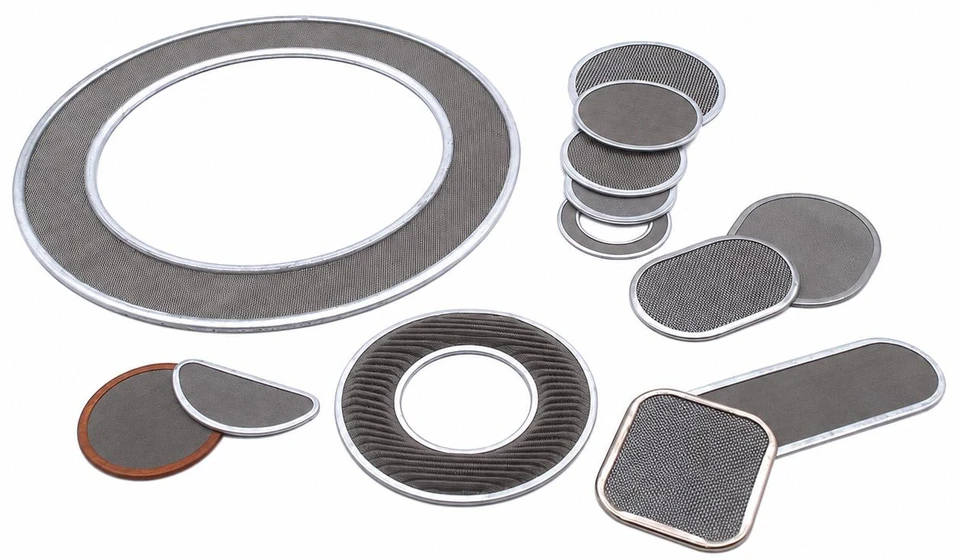
Custom flat, pleated and shaped metallic filters provide final protection before the spinneret or extrusion die. They can be configured for controlled melt cleanliness, flow distribution and protection of fine downstream geometry.
PET and RPET
Textile filament, industrial filament, staple fibre and selected nonwoven processes.
PA6 and PA66
Filament and other precision melt extrusion duties.
PP and PE
Fibre, nonwoven, film or other process compatible filtration duties.
Speciality Polymers
Subject to confirmed alloy, seal, temperature, viscosity and cleaning compatibility.
Selection considers the contaminant profile, viscosity, throughput, temperature, available area, clean pressure drop, terminal pressure and target operating life.
Filtration Objectives
Filters retain hard particles, oxides, carbonised material and agglomerates. A suitable depth medium can also retain deformable gel contamination. This helps protect spinneret capillaries, film dies and other critical flow passages.
The filter and its support stack should add controlled hydraulic resistance without excessive clean pressure drop, dead volume, deformation or bypass. Adequate filtration area and dirt holding capacity help manage the pressure rise rate across the operating cycle. Retention rating, permeability, support structure and sealing must be validated as a complete assembly; a mesh number alone is not a filter specification.
Filter Geometry
Flat Filters
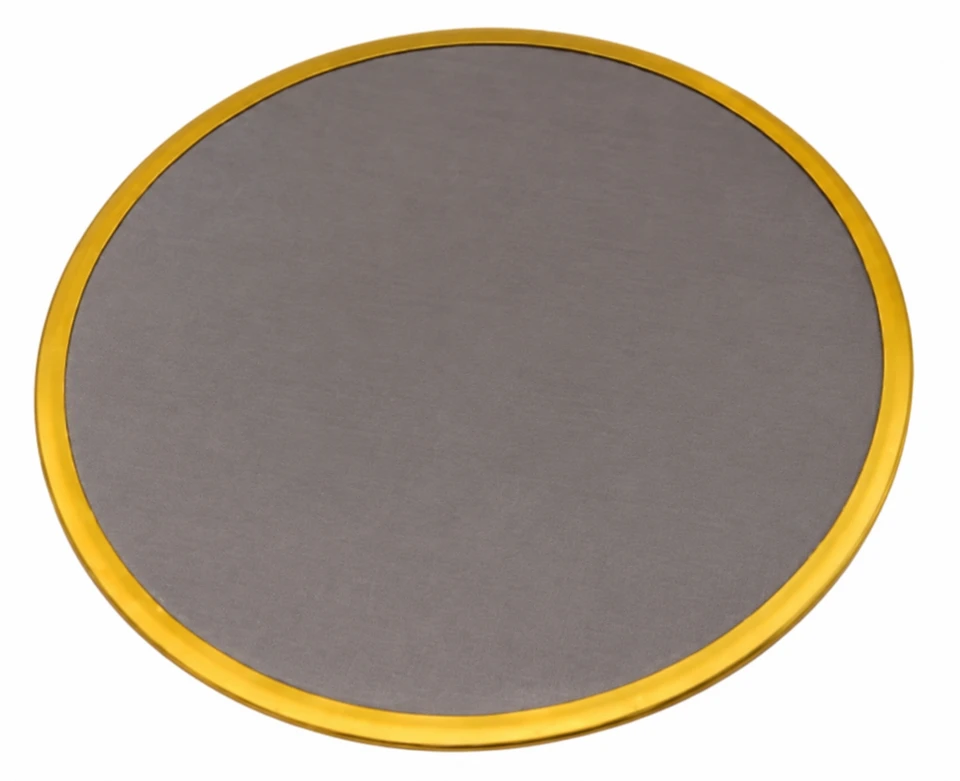
Compact and economical where pack depth is limited and contaminant loading is controlled.
Pleated Filters
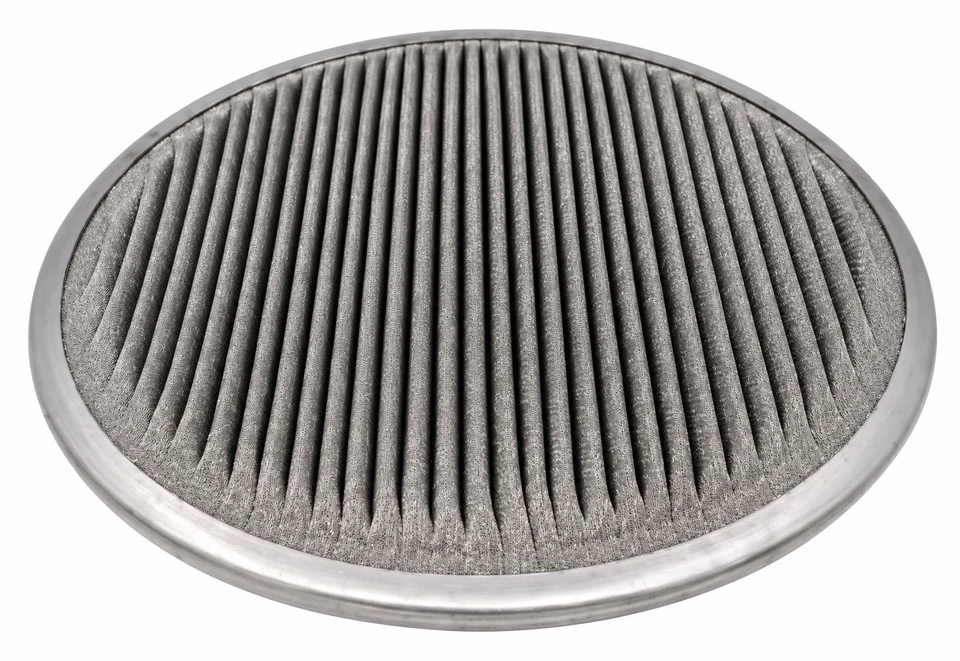
Expanded area can lower face velocity, reduce initial pressure drop or extend operating life.
Shaped Filters
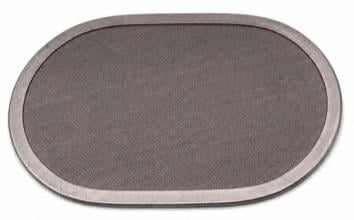
Round, annular, rectangular, semicircular, oval and application specific profiles can match existing cavities.
Geometry affects effective area, face velocity, initial pressure drop, dirt capacity and mechanical support. The approved pack dimensions remain the design boundary.
Envelope
Overall profile, outside dimensions, thickness and available cavity depth.
Sealing
Rim material, compression land, surface treatment and bypass control feature.
Layer Stack
Media grade, support layers, orientation, count and joining method.
Flow Direction
Upstream and downstream orientation, with support against differential pressure.
Use an approved drawing or dimensionally verified reference sample. A product photograph alone is not sufficient for manufacture.
Filtration Media Selection
Woven Wire Mesh
- Filtration Behaviour
- Primarily surface filtration through defined openings with good permeability.
- Selection Considerations
- Hard particles, lower contaminant loading, cleanability and robust support.
Dutch Weave Mesh
- Filtration Behaviour
- Dense woven path for finer retention with mechanical strength.
- Selection Considerations
- Tighter retention; support and permissible differential pressure remain critical.
Sintered Metal Fibre
- Filtration Behaviour
- Three dimensional depth filtration through a tortuous porous structure.
- Selection Considerations
- Broad contaminant loading, deformable gels, high dirt holding requirements and stable high temperature service.
Supported Composite
- Filtration Behaviour
- Fine filtration layer combined with drainage and structural support.
- Selection Considerations
- Application specific balance of retention, permeability, support and cleanability.
State whether the rating is nominal or absolute and identify its test method or acceptance basis. Confirm media construction, wire or fibre alloy, support layers and intended flow direction. Evaluate clean pressure drop and pressure rise at representative polymer viscosity and throughput, and confirm resistance to collapse, deformation, edge bypass and cleaning damage.
Products with the same nominal micron rating can have different pore distributions, permeability, dirt capacity and pressure behaviour.
Layer Construction, Support and Sealing
The layer stack must remain located and supported under temperature, differential pressure, handling and, where approved, cleaning cycles.
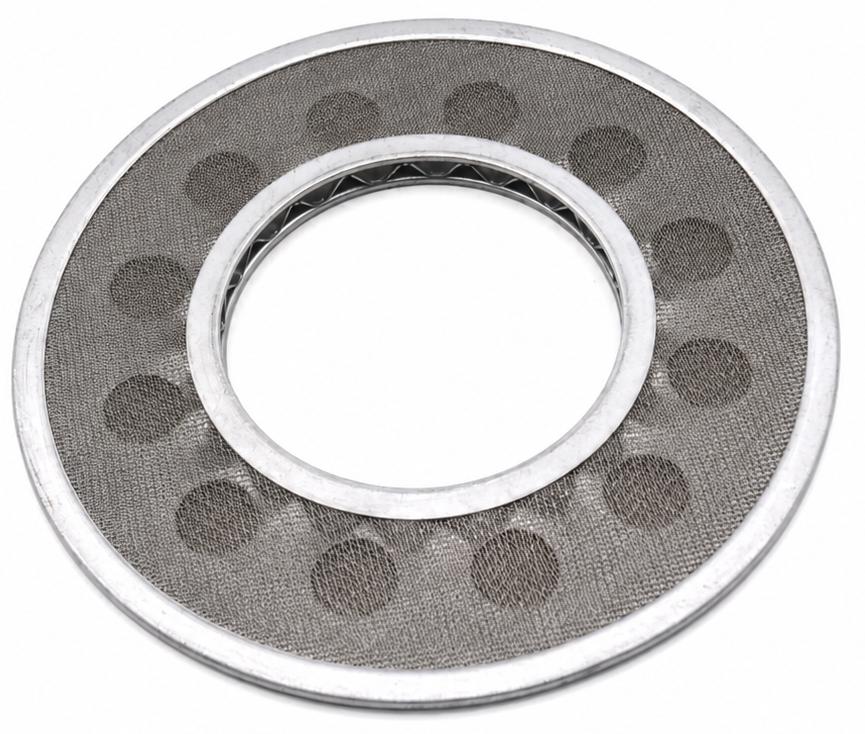
Edge and surface options include stainless steel, aluminium, copper and application specific sealing materials, with nickel plated copper, anodised aluminium or untreated stainless steel where appropriate. Final alloys, coatings and seals must be confirmed for polymer chemistry, temperature, cleaning method and product purity requirements.
Effect on Filament Quality
Pack filtration supports uniform spinning but is only one part of the quality system. It can reduce contamination related breaks and linear density variation, but cannot correct polymer degradation or faults in metering, temperature, quenching, the spinneret, drawing or winding. Its effects on tenacity and elongation are mainly indirect.
Linear Density / Denier Evenness
- Filtration / Pack Influence
- Uniform pressure and distribution help maintain comparable flow to each capillary. Fouling, bypass or uneven distribution can produce linear density variation.
- Interpretation
- Direct process support where metering and take up remain stable.
Filament Evenness / Cross Section
- Filtration / Pack Influence
- Cleaner capillaries and balanced flow reduce disturbances between holes and irregular filament formation.
- Interpretation
- Spinneret condition and quench symmetry also matter.
Tenacity
- Filtration / Pack Influence
- Removal of hard particles, gels and char reduces weak points and broken filaments. Excess residence time can negate the benefit through degradation.
- Interpretation
- Mainly indirect; draw ratio, orientation, crystallisation and polymer quality dominate.
Elongation
- Filtration / Pack Influence
- Stable melt and fewer defects can reduce variability, but filtration does not set molecular orientation.
- Interpretation
- Mainly indirect; drawing and winding conditions are primary controls.
Break Rate / Missing Filaments
- Filtration / Pack Influence
- Contaminant retention protects fine capillaries and reduces plugging related interruptions.
- Interpretation
- Strong direct relationship when contamination is the root cause.
Appearance / Defect Count
- Filtration / Pack Influence
- Removal of char, oxides, agglomerates and gels can reduce visible defects and deposits.
- Interpretation
- Direct for retained contamination; colour and degradation may have other causes.
Process Stability
- Filtration / Pack Influence
- Sufficient area and controlled resistance moderate pressure rise and extend the usable pack cycle.
- Interpretation
- Direct hydraulic effect; monitor differential pressure and throughput together.
Selection Inputs
Polymer
Grade, virgin or recycled content, additives, intrinsic or melt viscosity range and thermal sensitivity.
Process Duty
Filament, fibre, nonwoven, film, pellet or other extrusion service.
Operating Conditions
Normal and maximum melt temperature, viscosity, total throughput, throughput per pack and operating cycle.
Contamination
Hard particles, gels, char, oxides, agglomerates, target defect and current quality issue.
Filtration Requirement
Current and required rating, rating method, media type, effective area and quality objective.
Pressure Profile
Clean inlet and outlet pressure, initial differential pressure, terminal limit and pressure rise rate.
Pack Geometry
Cavity, filter dimensions, available depth, flow direction, rim and sealing method.
Life and Cleaning
Current change frequency, target pack life, cleaning method, reuse count and post cleaning test.
Provide the existing approved drawing, a verified sample, photographs, nameplate information and current product specification wherever available. Successful design balances retention, acceptable clean pressure drop, controlled pressure rise and useful operating life.
Plant Qualification
Initial Pressure Drop
- What to Record
- Stable throughput, melt temperature and viscosity after startup.
- Decision Value
- Confirms permeability and hydraulic fit.
Pressure Rise Rate
- What to Record
- Differential pressure trend over the agreed operating period.
- Decision Value
- Indicates contaminant loading and usable pack life.
Process Stability
- What to Record
- Throughput, melt temperature, pressure fluctuations and interruptions.
- Decision Value
- Checks that the assembly supports normal operation.
Filament Quality
- What to Record
- Linear density CV, tenacity and elongation with CV, breaks, missing filaments and visual defects.
- Decision Value
- Links pack performance to saleable quality.
Pack Condition
- What to Record
- Screens, plates, seals, retained contamination, deformation and evidence of bypass after removal.
- Decision Value
- Confirms mechanical suitability and failure mode.
Cleaning Recovery
- What to Record
- Post cleaning permeability, integrity result and pressure drop recovery.
- Decision Value
- Determines whether repeated use remains economical and safe.
First approve the drawing, media description, rating method, materials, dimensions and operating limits. Then agree trial quantity, baseline, operating window, monitoring frequency and terminal differential pressure. Compare the same polymer grade under stable process settings where practical. Assess yarn quality, pressure trend, pack life and total operating cost before routine approval.
Application Review and Controlled Supply
Application review progresses from process and quality data through drawing and media confirmation, dimensional sample approval and a controlled plant trial to routine supply against the agreed specification.
Pack Body and Interfaces
Mounting, melt feed, closure, sealing and spinneret interface to approved dimensions.
Media and Rating
Woven mesh, Dutch weave, sintered metal fibre, graded powder or supported composite to an agreed rating basis.
Internal Construction
Retaining screens, support layers, breaker or distribution plates and flow direction to the approved design.
Materials and Seals
Alloy and sealing materials selected for polymer, temperature, pressure and cleaning method.
Verification
Dimensional and visual inspection, with material, permeability or integrity records where specified.
Documentation
Quotation, approved drawing, product specification and agreed inspection or test records.
The approved OEM drawing and validated process conditions govern each project. Manufacturing location, certificates, test methods, inspection records and acceptance criteria are confirmed in the quotation and agreed supply documentation.
Polymer Filtration
Filter media selected for melt conditions and the required particle retention.
Material Selection
Match media construction to temperature, pressure and polymer compatibility.
Technical Support
Discuss filtration area, throughput and pressure drop for the application.